
South Carolina voters are clear about both the challenges facing K–12 education and the priorities they want state leaders to address.
New statewide polling provides insight into how South Carolinians view their schools today, where they see progress, where concerns remain and which policies they believe will best support student success.
Our sister organization ExcelinEd collaborated with UpOne Insights and Impact Partners to gain a better understanding of South Carolinians’ views on key education issues.
The statewide survey of 400 registered South Carolina voters, conducted online from Sept. 22 – Oct. 1, 2025 (±5.59%), illustrates several issues: while many voters believe improvement is needed, the data show strong and consistent support for education reforms focused on academic fundamentals, school accountability, effective teaching and preparation for students’ lives after high school.
Below are some of the most important insights from the survey and what they reveal about the future of education in the Palmetto State.
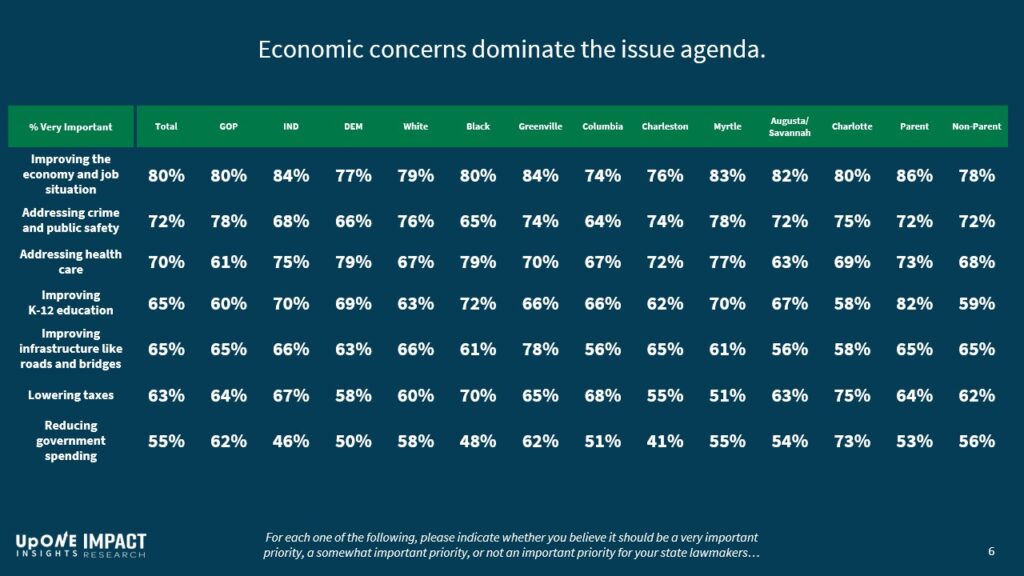
Nearly two-thirds of South Carolinians (65%) say K–12 education is a “very important” issue for state lawmakers, placing it among the highest-ranked policy priorities alongside the economy, public safety and health care.
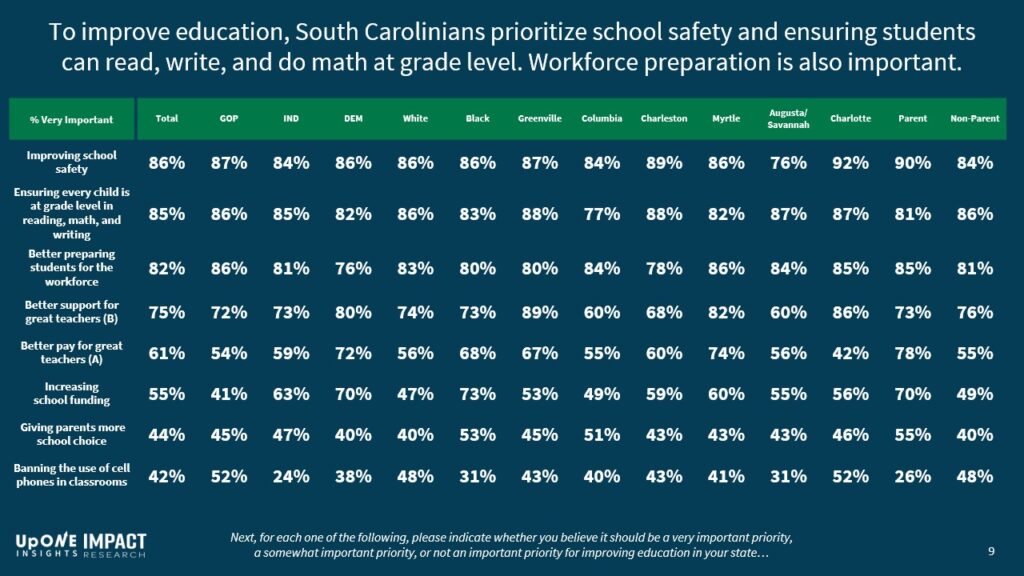
South Carolinians are also closely aligned on what schools should focus on most.
Large majorities say it is very important for schools to ensure students reach grade-level proficiency in reading, math and writing (85%).
Workforce preparation is also essential, with more than eight in 10 voters (82%) emphasizing the importance of preparing students for careers and life beyond high school.
Support for teachers is another key theme. Nearly seven in 10 voters (69%) believe teacher pay is too low, and strong majorities support targeted approaches to compensation. More than four in five South Carolinians (81%) favor providing extra pay to effective teachers who work in at-risk schools.
Together, these findings reflect a desire for high expectations for students paired with meaningful support for educators.
With a comprehensive early literacy policy in place and encouraging signs of progress, math policy is now front and center in the Palmetto State. Concerns about math achievement are widespread among South Carolina voters and highlight the need for further reform.
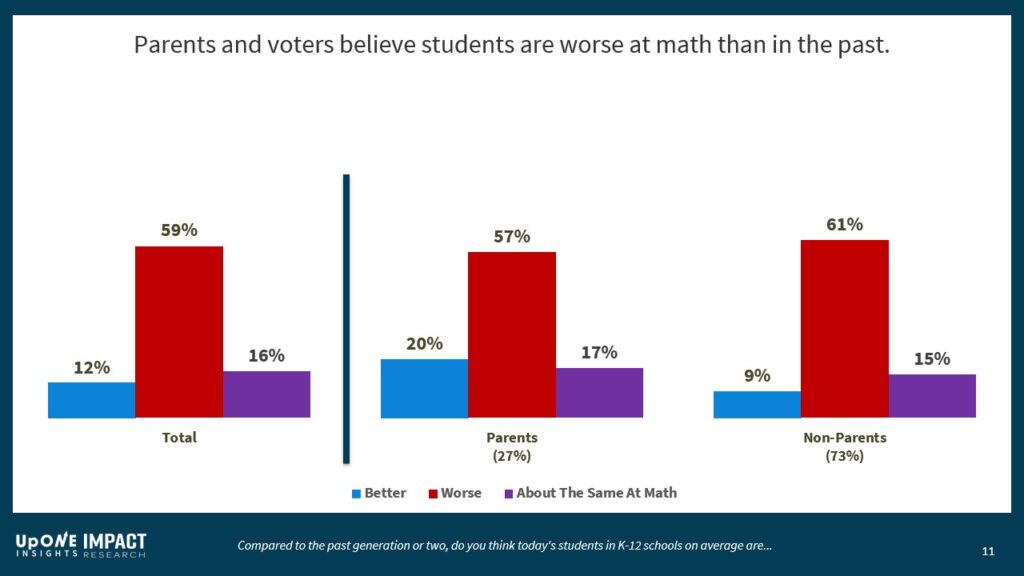
Nearly six in 10 (59%) believe students today are worse at math than past generations. In response, voters overwhelmingly support policies that strengthen math instruction early and consistently.
The recent creation of the Palmetto Math Project focuses on statewide instructional coaching, high-quality instructional materials and high-quality professional development for math teachers. The state’s renewed focus on math comes at the right time.
Voters strongly support policies that emphasize foundational math skills.
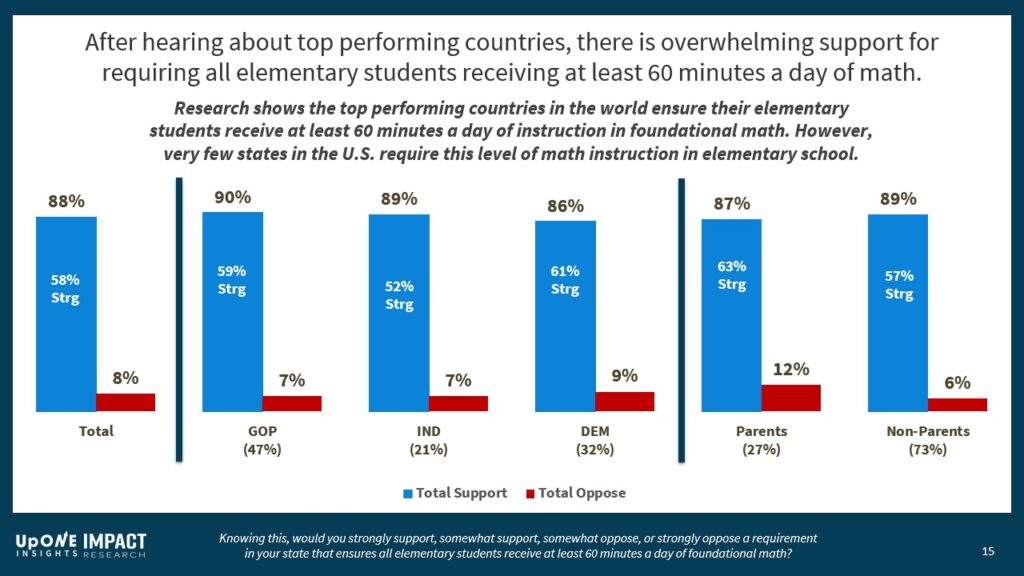
Improving math scores starts with guaranteeing at least 60 minutes of daily math instruction. Regular, sustained practice builds the foundation students need to succeed, and this standard mirrors the policy of top-performing countries. When asked about a proposal to introduce 60 minutes of math each day, survey respondents demonstrated a high level of support, at 88% of respondents in agreement.
South Carolinians want all students to be prepared for success in math, with additional pathways for higher-performing students to reach their full potential.
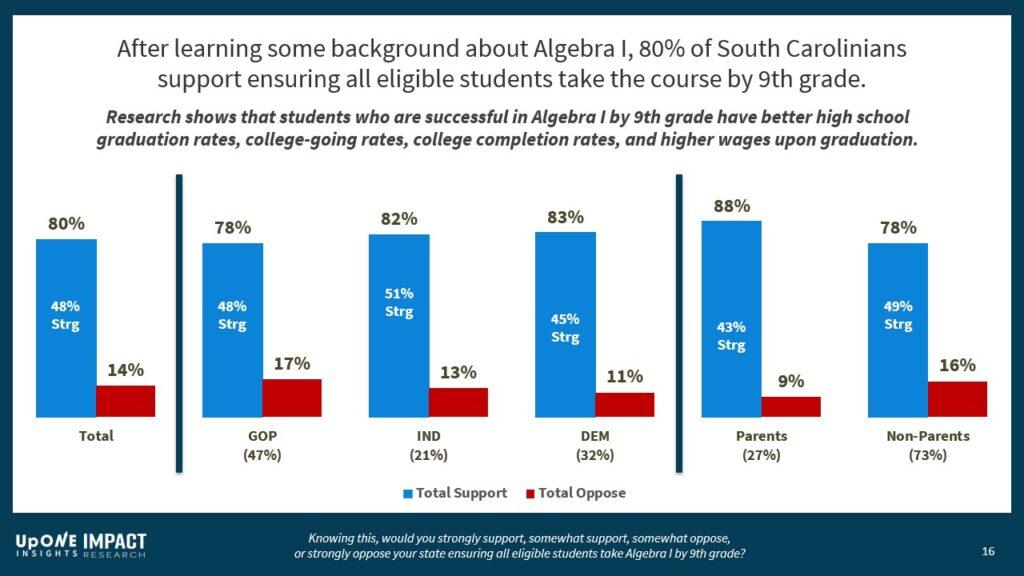
A substantial body of research links success in Algebra I to improved academic and career outcomes. ExcelinEd in Action supports requiring all students to take and pass Algebra I or Integrated Math I (IM I) by ninth grade, ensuring they are prepared for the academic rigor of high school and postsecondary opportunities. This policy received exceptional support among South Carolinians, with 80% of respondents in agreement.
Support for guaranteed access to advanced math coursework is also strong, at 82% of respondents. Guaranteed access ensures that students who are mathematically ready are proactively identified and enrolled in advanced math pathways leading to Algebra I in middle school, positioning high performers to reach higher-level math courses in high school.
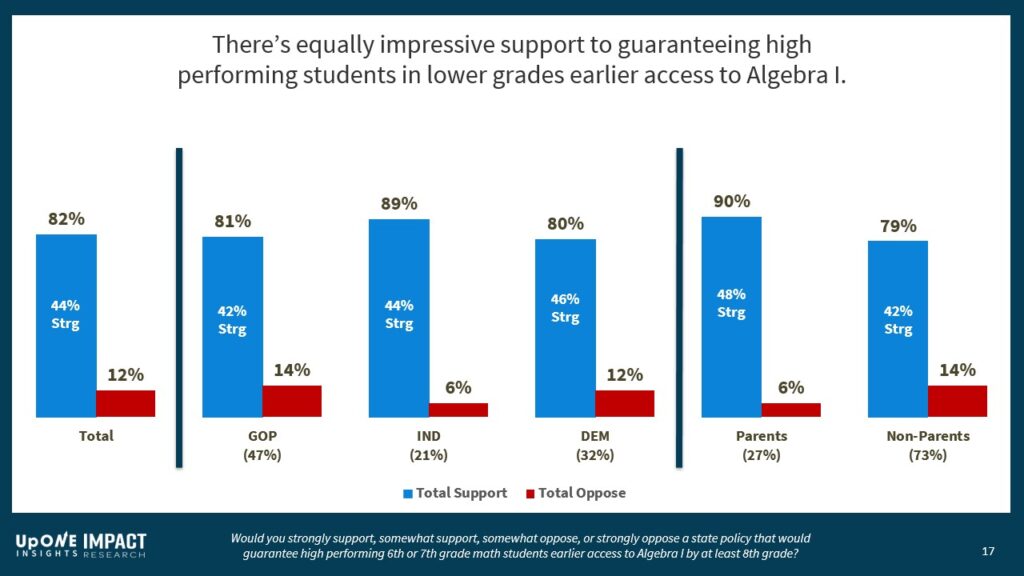
This level of support highlights a clear opportunity for state leaders to codify a comprehensive math policy with confidence that voters are behind them.
ExcelinEd’s Math Matters digital tool is a resource aimed at providing policymakers with the tools and data needed to enact math reform in their state.
South Carolinians want clear, accessible information about how schools are performing but with unclear measures of school performance and student success, they currently lack the clear information they deserve.
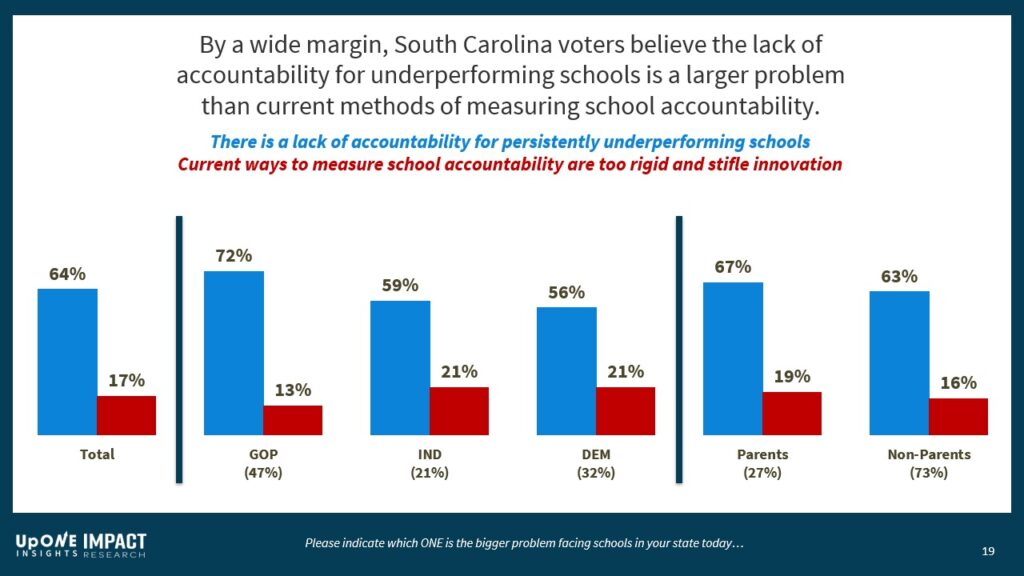
Nearly two-thirds of voters (64%) cite lack of accountability as their top concern about schools—more than any other issue.
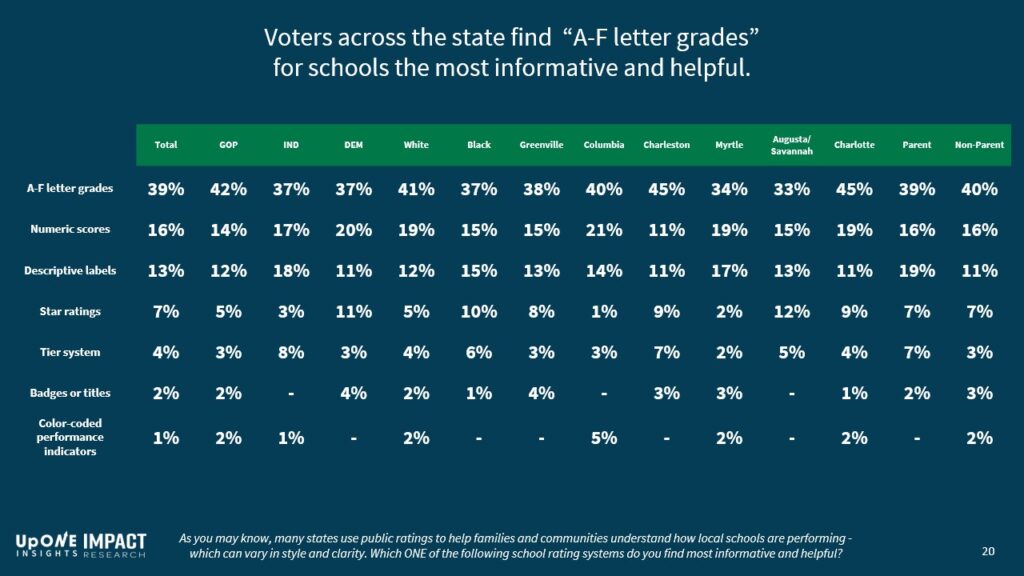
When asked how school performance should be communicated, voters most often prefer an A–F letter grade system, reflecting a desire for clarity and transparency.
When it comes to what should matter most in evaluations of school performance, South Carolina voters overwhelmingly prioritize: grade-level performance (43%), academic growth (31%), graduation rates (29%) and college or career readiness (22%).
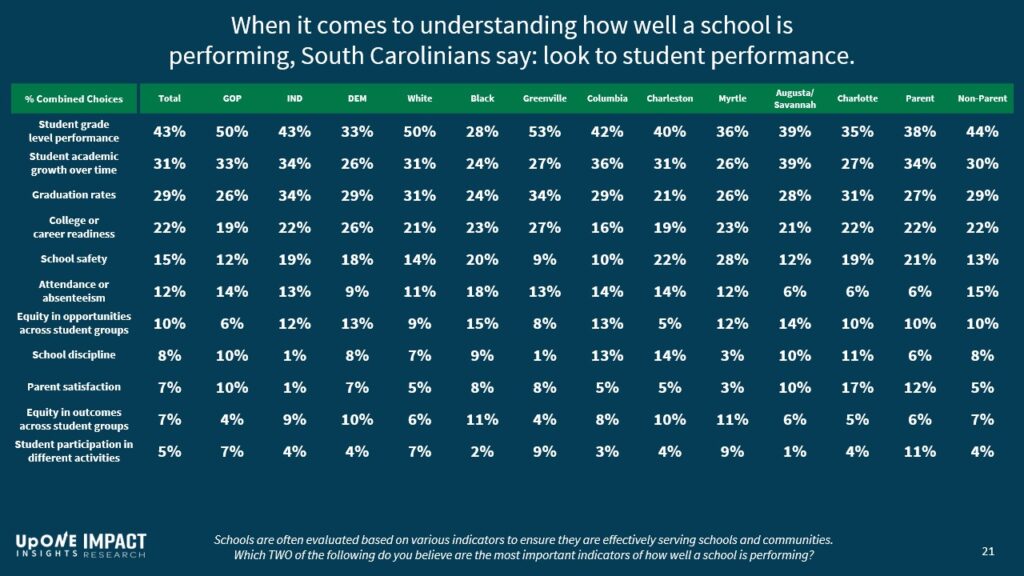
South Carolina voters want students to grow academically, reach grade-level expectations and be ready to thrive after graduation. When considered together, they provide a fuller understanding of school performance and the outcomes that matter most to families and communities.
Policymakers should take note and consider the benefits of simpler, more rigorous measures of school performance.
Policymakers took bold action in the 2025 legislative session to strengthen the teaching profession and are poised to take further action this session, with opportunities for continued reform in future years.
Public opinion in South Carolina shows strong support for providing teachers with greater resources and recognition, particularly when that support is tied to effectiveness and impact in the classroom. This aligns with national trends highlighting widespread concern about teacher compensation.
More than two-thirds of South Carolina voters believe that teacher salaries and benefits in the state are too low, signaling broad public backing for policies that reward excellence and strengthen the teaching profession. South Carolina’s FY 26-27 appropriations bill is currently moving through the legislature and includes $5 million for strategic teacher compensation, which will be the third year of funding, and $1.4 million for a career ladder pilot program to provide effective educators with opportunities for career advancement.
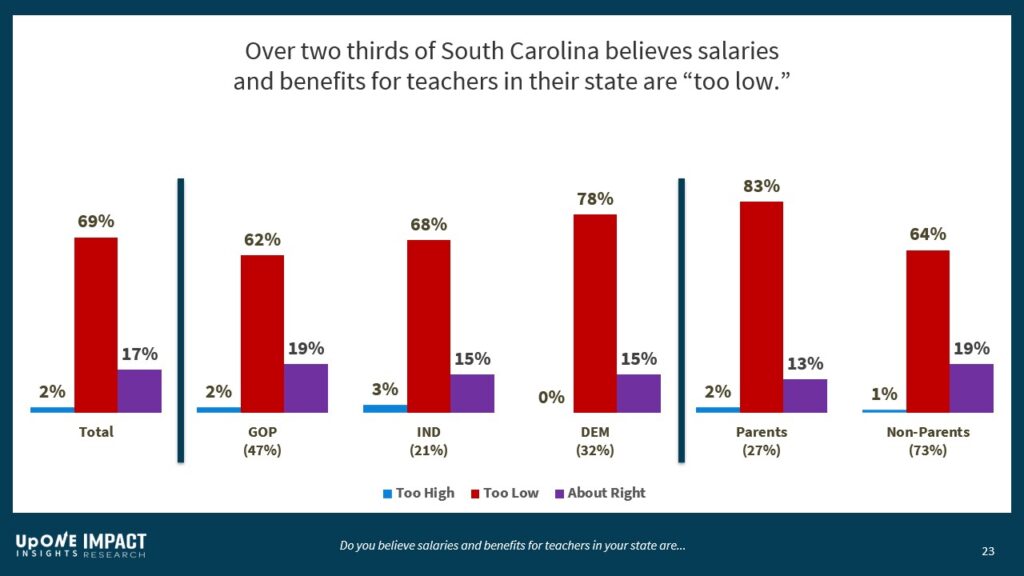
Public opinion in South Carolina shows strong support for policies that recognize and reward teaching excellence.
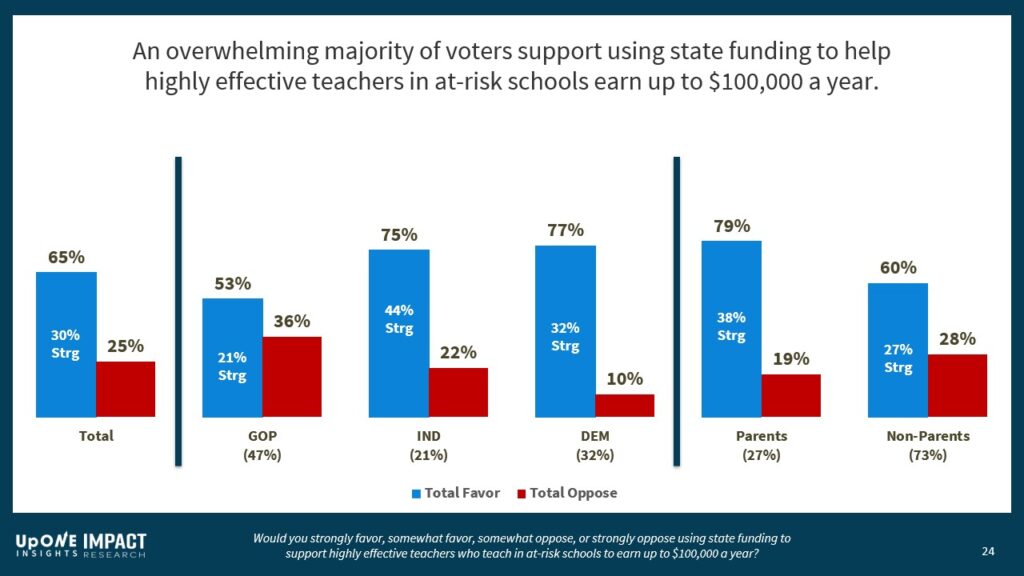
Notably, 65% of voters support providing additional compensation to highly effective teachers who work in at-risk schools, demonstrating that South Carolinians value targeted investments in educators rather than across-the-board pay increases. This support highlights a focus on connecting resources and incentives to student outcomes and improving overall school performance.
Over the past few years, South Carolina’s education choice landscape has evolved, with the state implementing and refining a range of options designed to give families more flexibility. This includes a growing public charter school sector and an Education Scholarship Trust Fund program that provides education savings accounts (ESAs) to eligible students to use on a variety of approved educational expenses. South Carolina policymakers could increase options by expanding interdistrict open enrollment opportunities.
South Carolina voters remain clear on an important point: a strong majority want families to have options in how and where their children are educated. Recent polling shows broad support for school choice overall, with large majorities saying students and parents should be able to select the school that best fits their needs.
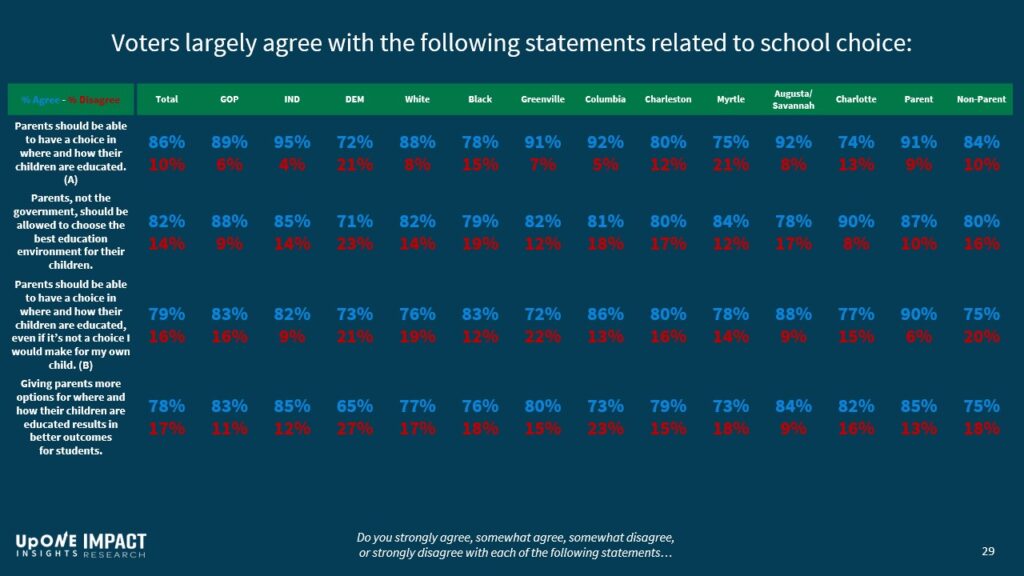
As school choice options continue to grow and public support remains high, South Carolina voters are sending a clear message that policymakers should continue to meet the diverse needs of students and families.
Strengthening college and career pathways is expected to be a top priority for policymakers heading into 2027 and beyond. Many South Carolina voters believe schools must do more to prepare students for life after high school. A majority of voters (52%) say high school graduates are not adequately prepared for what comes next.
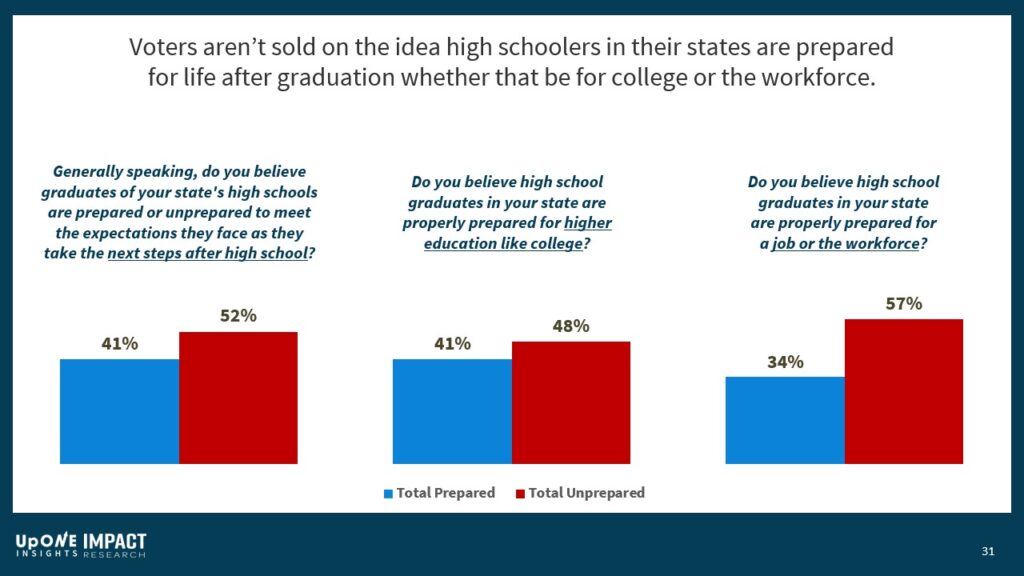
A large majority of South Carolinians see little difference between postsecondary enrollment and employment, viewing both as equally legitimate and valuable measures of success after high school. This perspective reflects widespread recognition that students can pursue multiple pathways, and that college attendance, workforce entry or other postsecondary options all represent meaningful outcomes for students’ futures.
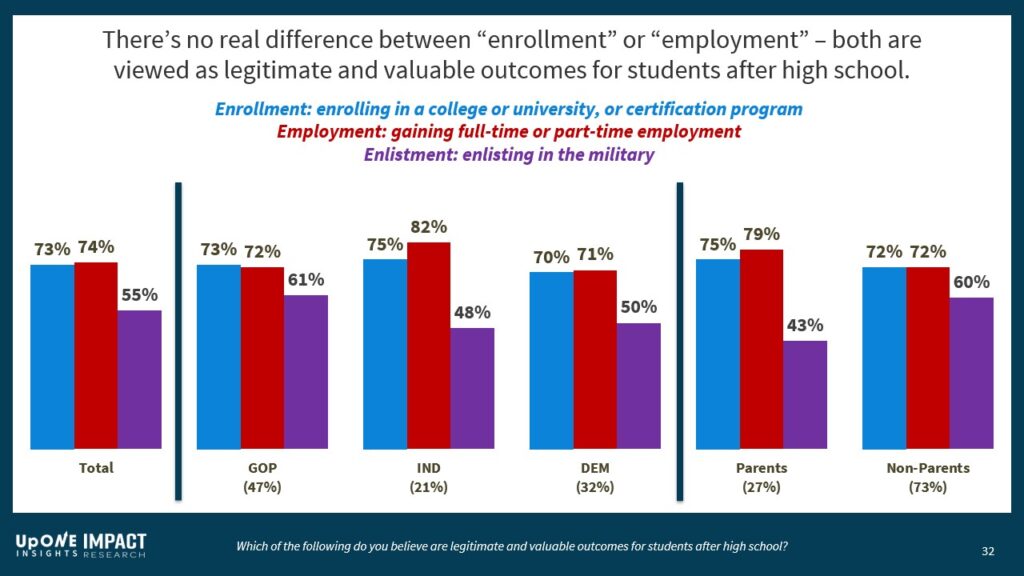
In response, voters support outcomes-based approaches that connect education funding and incentives to student success.
For instance, 79% of South Carolina voters support providing financial incentives to schools that help students succeed after graduation. This widespread support indicates that voters value strategies that reward schools for preparing students for meaningful next steps—whether in higher education, the workforce or other postsecondary pathways—and see fiscal incentives as a way to encourage long-term student success.
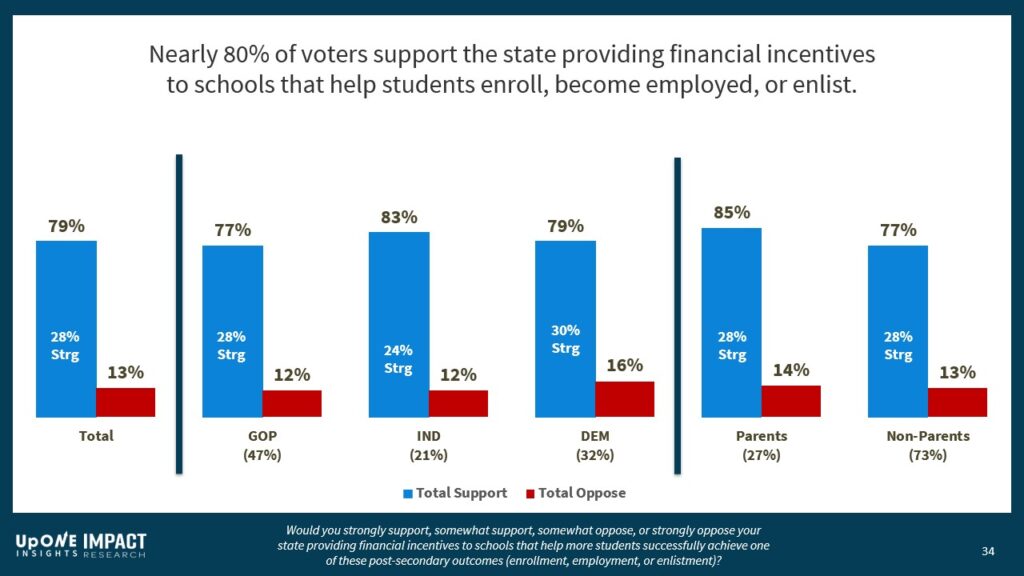
These findings reflect growing public support in South Carolina for aligning education policy with real-world outcomes whether students pursue college, careers or technical training.
Through its newly relaunched Pathways Matter digital tool and targeted policy recommendations, ExcelinEd highlights strategies to better connect South Carolina’s K–12 and postsecondary systems with workforce needs, expand access to high-quality credential opportunities and support smooth transitions for students after graduation.
Taken together, the polling sends a clear message: South Carolinians want an education system that emphasizes academic fundamentals, holds schools accountable for results, supports effective teachers and prepares students for life after high school.
Policymakers in South Carolina should celebrate the progress they’ve made and embrace the opportunities ahead.
While voters recognize that challenges remain, they are united around practical, student-centered solutions. The data point to strong public support for policies that raise expectations, strengthen school accountability and ensure every student has the opportunity to succeed.
Connect with ExcelinEd in Action’s advocacy team to learn more about the poll findings and explore solutions designed to meet South Carolina’s needs. Together, we can advance student-centered policies that expand opportunities and improve outcomes for learners across the state.
