Evan Eagleson is a Legislative Director for ExcelinEd in Action. In this role, he aids the advancement of student-centered legislation in the Great Lakes region.

New statewide polling offers a clear view of what Hoosier voters expect from their education system, and where state policy is already delivering results.
Our sister organization ExcelinEd collaborated with UpOne Insights and Impact Partners to survey 400 registered Indiana voters, conducted online from Sept. 22 – Oct. 1, 2025 (±5.59%).
The results point to a consistent theme: voters recognize challenges but strongly support policies focused on academic fundamentals, effective teaching and college and career readiness. Recent legislation reflects these priorities, with sustained focus on literacy, math, teacher retention, college and career pathways and distraction-free learning environments.
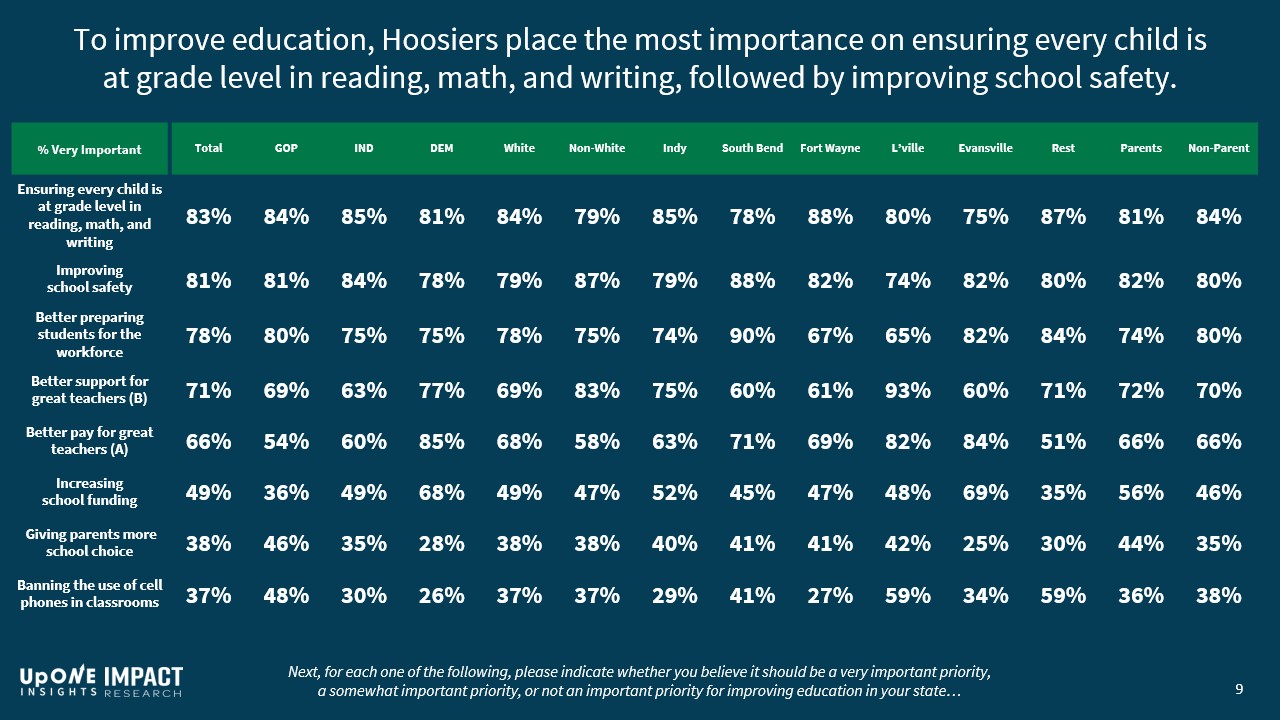
Indiana voters are strongly aligned on what matters most in schools. More than eight in 10 Hoosiers (83%) say ensuring students reach grade-level proficiency in reading, math and writing is very important.
State leaders echo this support. Beginning with a large state investment in 2022, and in legislation passed in each of the past four legislative sessions, Rep. Bob Behning, Rep. Jake Teshka, Sen. Jeff Raatz and Sen. Linda Rogers have sponsored comprehensive legislation to address the literacy crisis.
Indiana has passed and is now implementing, or in the process of implementing all 18 of ExcelinEd’s fundamental principles of early literacy including:
While significant progress has been made to strengthen early literacy policies, and statewide assessment results reflect this progress, work remains to establish supports for adolescent students as 2024 National Assessment of Educational Progress (NAEP) data show just 37% of Indiana’s eighth grade students at or above NAEP Proficient.
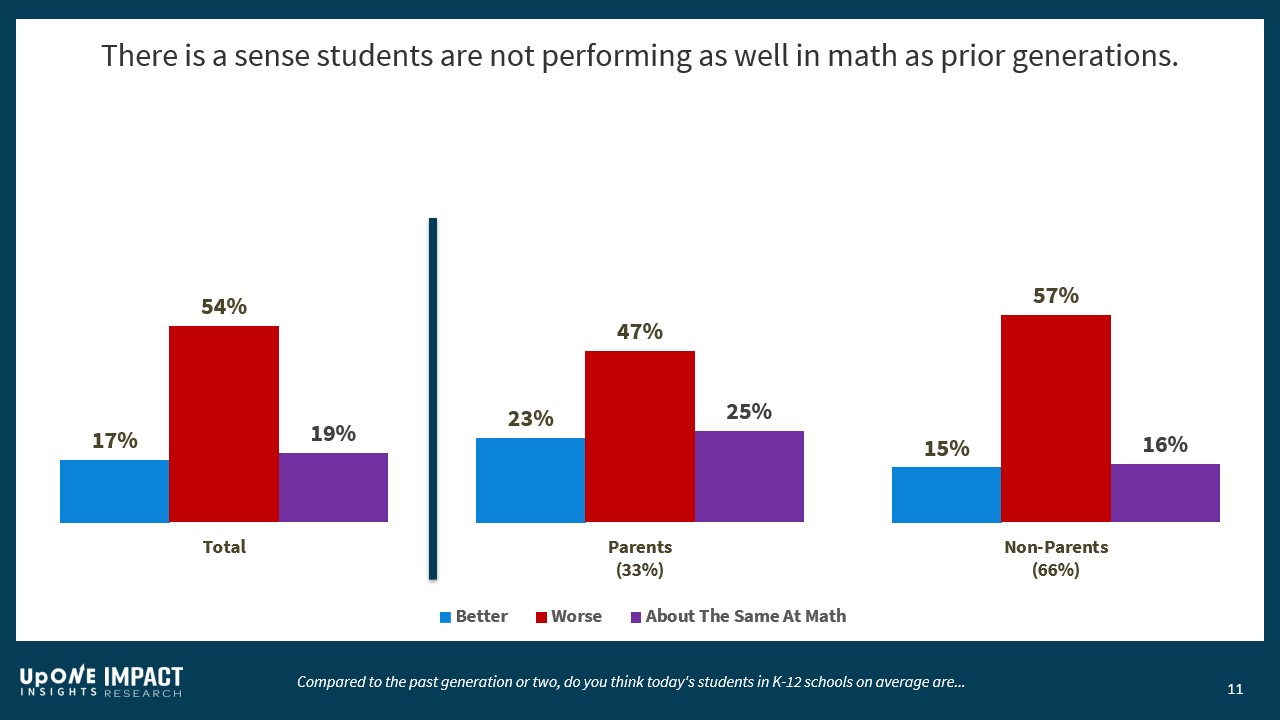
Concerns about math achievement are widespread among Indiana voters. More than half of Hoosiers (54%) believe students today are worse at math than previous generations. In response, voters overwhelmingly support policies aimed at strengthening math instruction early and consistently.
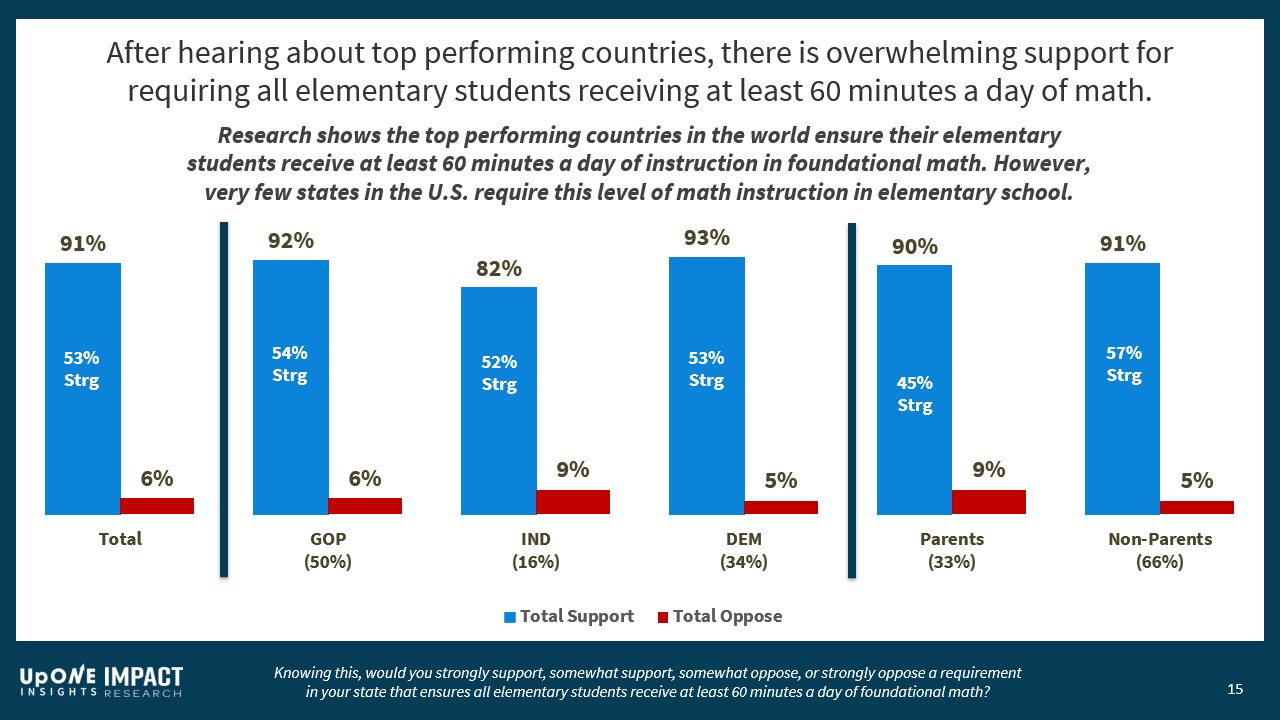
Regular, sustained practice builds the foundation students need to succeed, and this standard mirrors the approach of top-performing countries. When asked about a proposal to introduce 60 minutes of math each day, survey respondents demonstrated an overwhelming level of support (91%).
Lawmakers share these concerns and have jumped into action. Reps. Bob Behning, Jake Teshka and Sen. Linda Rogers have, in recent years, championed legislation aimed at strengthening math instruction, teacher preparation and supports for struggling students.
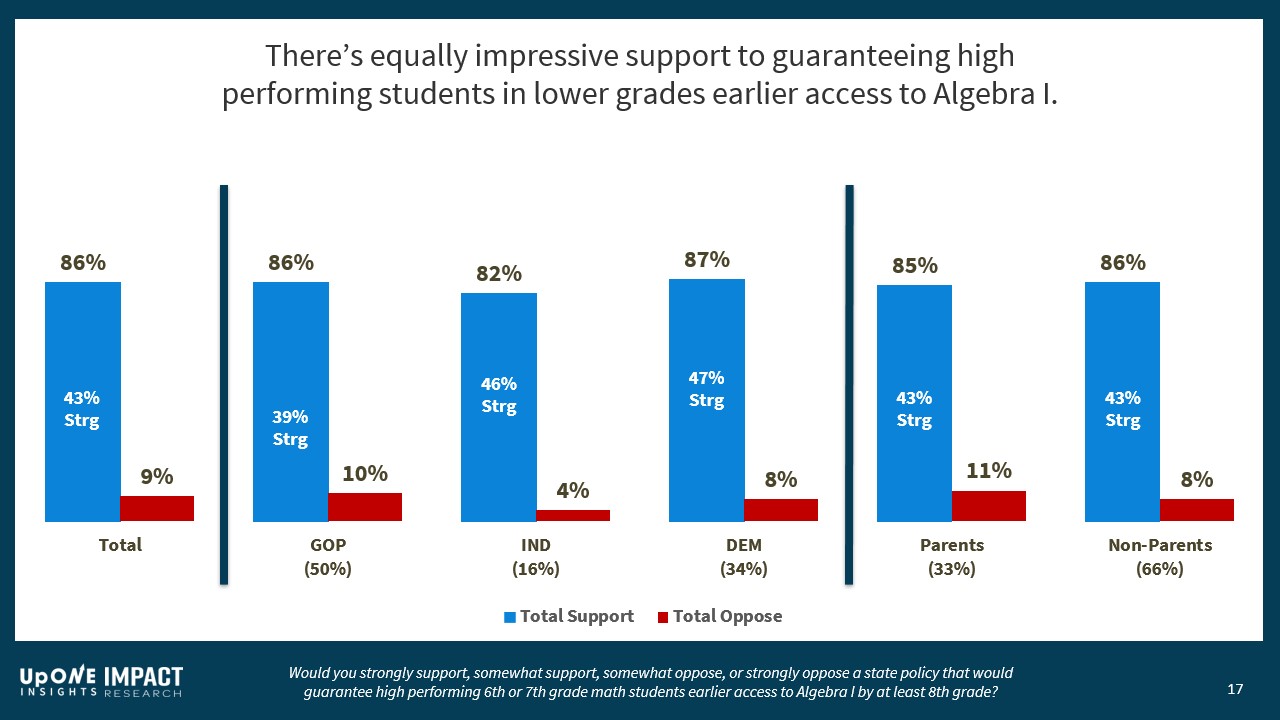
Guaranteed access to advanced math is another proven math policy that has been adopted in a number of states, including Indiana. It ensures that students who are mathematically ready are proactively identified and enrolled in advanced math pathways leading to Algebra I in middle school and positioning high performers to reach higher-level math courses in high school. Support for guaranteed access is also strong, at 86% of respondents.
The strong consensus for strengthening math instruction suggests Indiana leaders have significant public backing to continue prioritizing math achievement. Looking ahead, lawmakers are well-positioned to build on this momentum by expanding supports such as individualized math plans, instructional coaching and consistent daily math instruction.
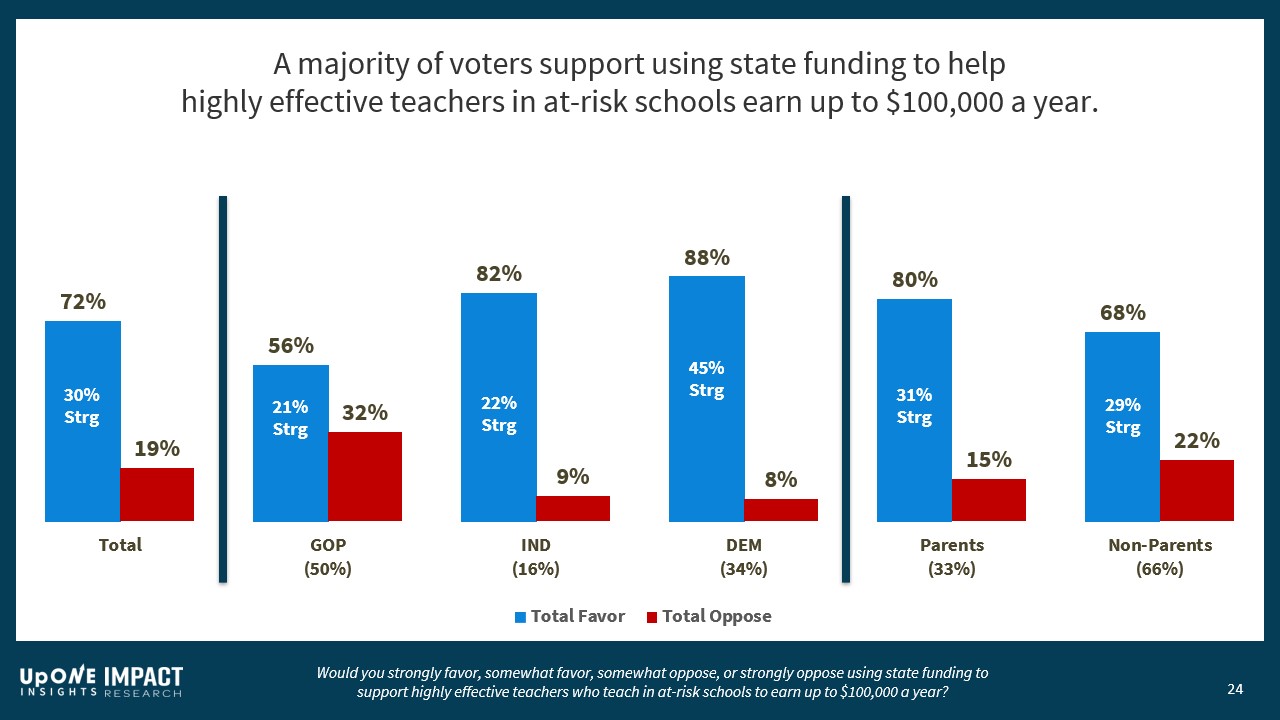
Hoosier voters are in favor of strengthening teacher support with targeted teacher compensation. 72% of voters are supportive of additional pay for highly effective teachers who choose to work in at-risk schools. This support reflects a preference for investing in strategies that connect resources and incentives to student outcomes and improved performance.
In 2025, with an eye toward strengthening teacher retention, the state budget included $35 million in funding for the state’s Teacher Appreciation Grant (TAG) program along with programmatic changes that will help better recognize and reward Indiana’s top educators. In the 2027 budget session, this is likely to be a continued priority, further answering the call of Hoosier voters to provide additional pay for highly effective educators.
Other noteworthy efforts from state leaders to strengthen the teaching profession and better support educators include introducing legislation to support paid parental leave and reducing classroom distractions so teachers can focus on teaching.
While the 2025 effort to provide paid parental leave did not pass, lawmakers have directed the Department of Education to study and make recommendations for paid family leave, setting up discussions in coming legislative sessions. The passage of SB 78 in 2026 codified bell-to-bell distraction-free learning statewide, ensuring focused learning environments for both students and educators.
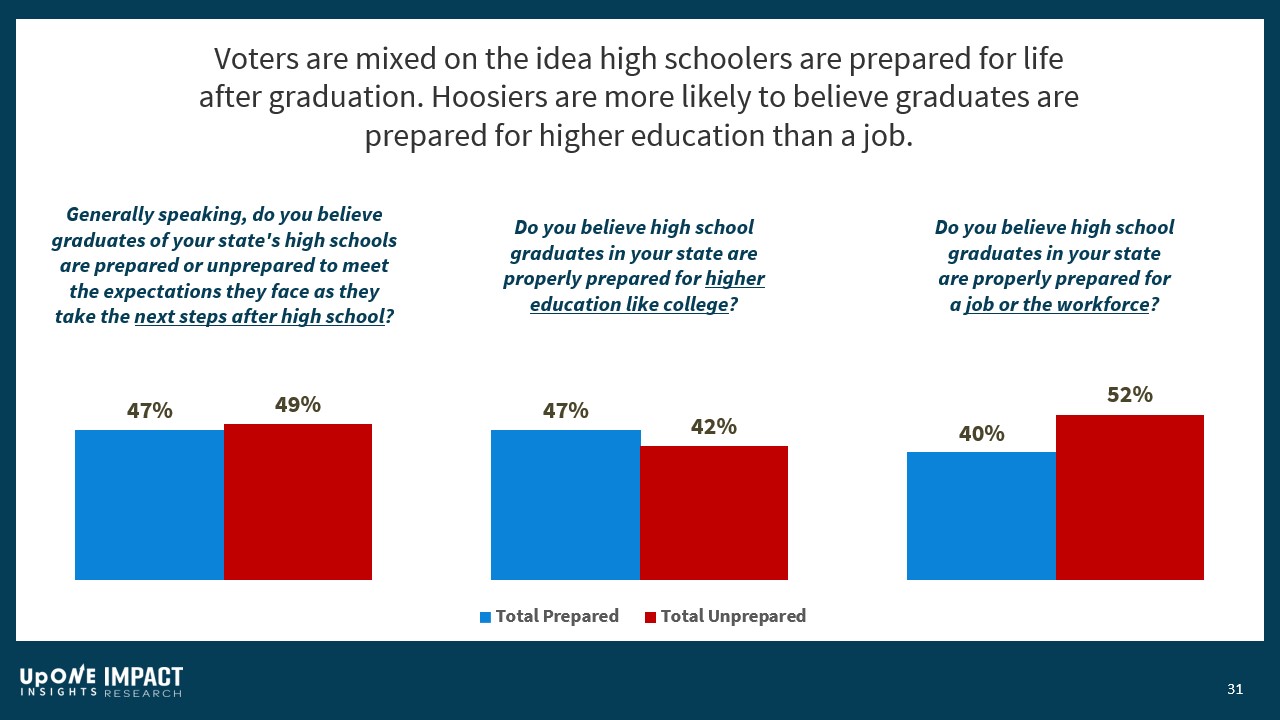
Nearly half of voters (49%) say high school graduates are unprepared for life after high school. In response, voters strongly support outcomes-based approaches to education funding and incentives.
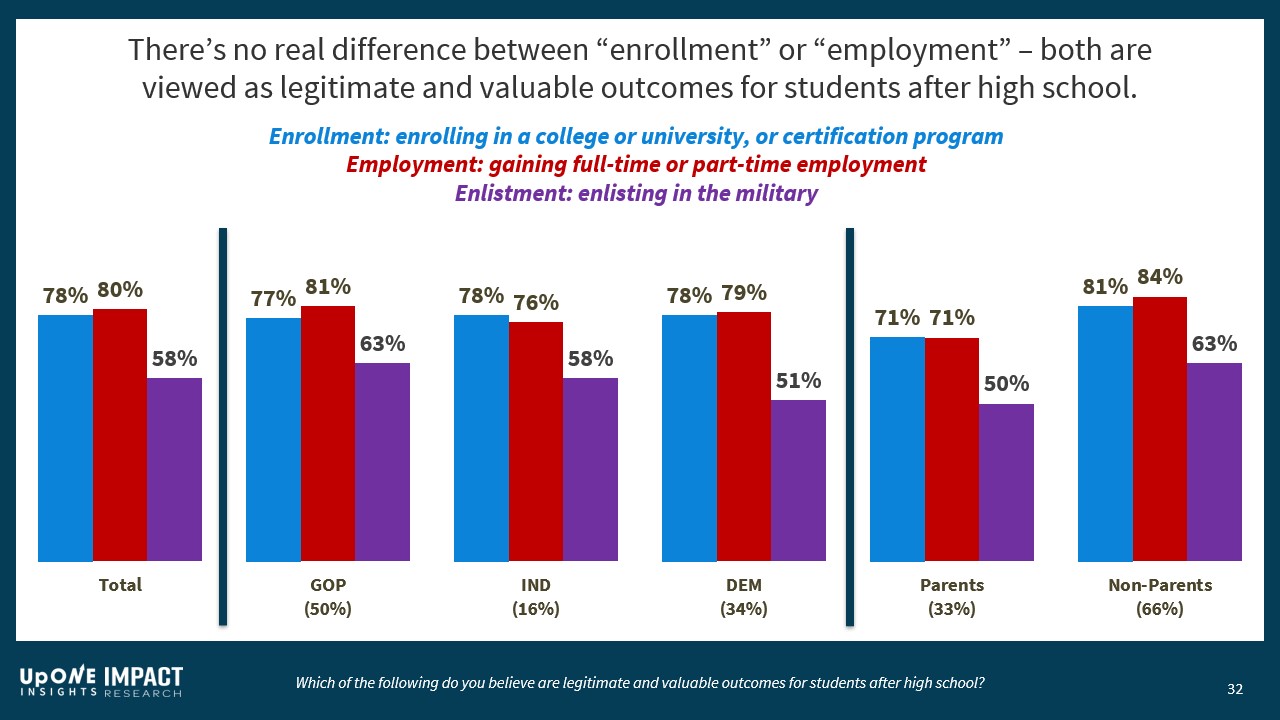
Little distinction is made between postsecondary enrollment and employment, as both are widely seen as legitimate and valuable measures of success after high school. This view reflects an understanding that students can pursue multiple pathways, and that college attendance, workforce entry or other postsecondary options each represent meaningful outcomes.
Indiana policymakers have taken decisive action to better prepare students for life after high school. The creation and continued funding of the Career Scholarship Account (CSA) program ensures students have greater access to work-based learning opportunities and credentials of value. Additionally, as part of Indiana’s new diploma structure, high school students can earn readiness seals toward enrollment in college, employment and enlistment.
In order to boost the talent pipeline in the state, Indiana leaders should further support and provide funding for opportunities like youth apprenticeships, which provide students with paid work experience in high-demand industries, strengthening the workforce and preparing students for postsecondary enrollment or employment.
Taken together, the polling sends a clear message: Hoosiers want an education system that emphasizes academic fundamentals, holds schools accountable for results, supports effective teachers and prepares students for life after high school.
The message from Hoosier voters is clear: prioritize what works. Strengthen academic foundations, support effective educators and ensure every student graduates prepared for what comes next.
Indiana leaders have a strong opportunity to build on this alignment by advancing policies that raise expectations, expand opportunity and deliver measurable results for students statewide.
Connect with ExcelinEd in Action’s advocacy team to learn more about the poll findings and explore solutions designed to meet Indiana’s needs. Together, we can advance student-centered policies that expand opportunities and improve outcomes for learners across the state.
References
