Tom Greene is the National Legislative Director for ExcelinEd in Action. In this role, he manages the organization’s advocacy team and works with leaders and lawmakers from across the states to promote student-centered solutions.

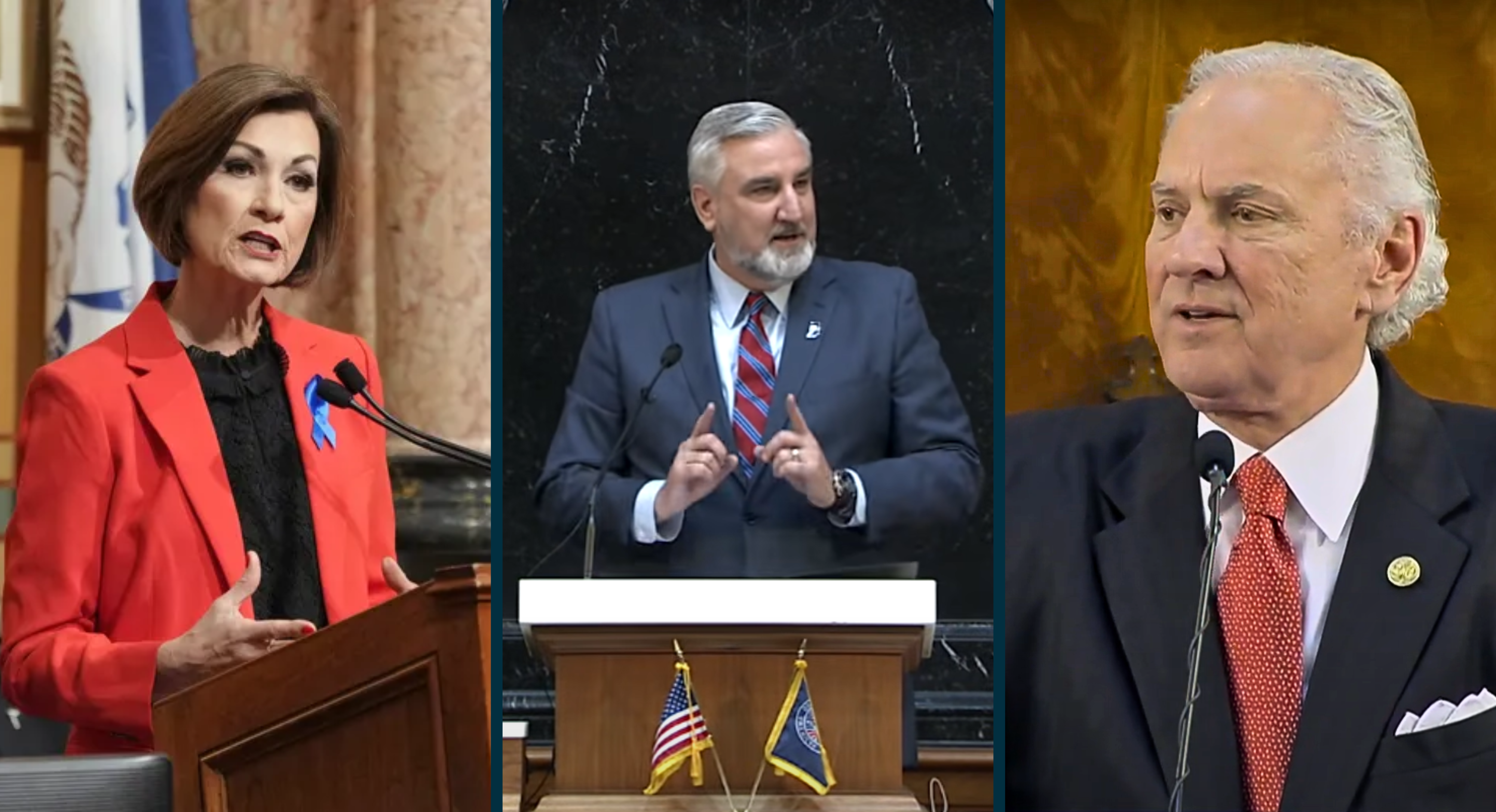
State governors outline their new year agendas and legislative goals in their annual State of the State addresses—but not all governors prioritize K-12 education policies. Our Advocacy team closely tracks each of these speeches to identify those governors who advocate for student-centered education policies. This blog post brings them all together in one place.
As legislative sessions continue, we’ll regularly update this post with insights from additional State of the State speeches nationwide. Stay informed of governors’ 2024 education priorities as they share the visions and strategies that are sure to impact students across the country.
At a glance, governors from these states have set transformative education goals: Alabama, Arkansas, Colorado, Connecticut, Delaware, Georgia, Florida, Idaho, Indiana, Iowa, Louisiana, Massachusetts, Mississippi, New Hampshire, New Jersey, New Mexico, New York, Ohio, Oklahoma, Pennsylvania, South Carolina, Tennessee, Utah and Virginia.
(from State of the State addresses as of 4/11/2024)
Alabama
Alabama Gov. Kay Ivey made an expansive, statewide education scholarship account her top legislative priority. She also shared goals to create an artificial intelligence task force, develop Alabama’s workforce, raise teacher pay and support science-backed math and early literacy policies.
Arkansas
Arkansas Gov. Sarah Huckabee Sanders shared the transformative results from the first year of the Arkansas LEARNS Act. She also called for the legislature to again fully fund the LEARNS Act so Arkansas can continue to see gains in early literacy, school choice opportunities and teacher support.
Colorado
Colorado Gov. Jared Polis prioritized an increase in funding for students, fair funding for charter schools and an expansion of free community and technical college for in-demand careers.
Connecticut
Connecticut Gov. Ned Lamont shared his desire to see continued work to strengthen the teacher pipeline and to restrict cell phone and social media access in classrooms.
Delaware
Delaware Gov. John Carney drew attention to the critical issue of early literacy. In addition to Department of Education work already underway, the governor’s budget proposes more funding for reading coaches.
Florida
Florida Gov. Ron DeSantis reaffirmed the state’s long-standing commitment to education. He expressed his desire to make Florida number one in workforce development.
Georgia
Georgia Gov. Brian Kemp emphasized the state’s continued record investment in education in 2024 and challenged the legislature to work together to empower families with strong education choice opportunities.
Idaho
Idaho Gov. Brad Little called for the addition of $2 billion in new funding for school facilities and maintenance, an increase in teacher pay, improved student literacy rates and continued development of the Idaho LAUNCH grants, which help cover enrollment tuition for post-high school education or training programs.
Indiana
Indiana Gov. Eric Holcomb expressed the need to improve third-grade reading proficiency by strengthening retention, mandating computer science as a graduation requirement and creating more college and career pathways.
Iowa
Iowa Gov. Kim Reynolds focused on passing a comprehensive early literacy policy, advocating for the science of reading and banning three-cueing and providing teachers with professional development. Additionally, she emphasized strengthening the teacher pipeline and supporting expansive parental choice options.
Louisiana
Louisiana Gov. Jeff Landry made education a top priority in his 2024 address to the joint legislature, setting sights on early literacy, math, improved classroom environments and educational opportunity.
Massachusetts
Massachusetts Gov. Maura Healey set a goal for her state to be first in the nation for early literacy. She emphasized evidence-based literacy materials in schools and a comprehensive approach to teacher professional development in early literacy best practices, backed by a $30 million investment.
Mississippi
Mississippi Gov. Tate Reeves proposed bold ways to connect students with the careers of tomorrow through policies, such as new high school apprenticeships and new STEM magnet schools.
New Hampshire
New Hampshire Gov. Chris Sununu called for the legislature to expand the state’s Education Freedom Accounts to serve more students, bonus incentives to bring more computer science teachers into schools.
New Jersey
New Jersey Gov. Phil Murphy prioritized literacy and mentioned forthcoming proposals to ensure students are taught the fundamentals aligned to the science of reading.
New Mexico
New Mexico Gov. Lujan Grisham set a goal to “double down” and “supercharge” early literacy efforts, calling for significant funding to establish a Statewide Literacy Institute and a free summer literacy program aimed at ensuring 10,000 students achieve grade-level reading proficiency.
New York
New York Gov. Kathy Hochul highlighted her administration’s intention to propose $10 million to train teachers in evidence-based literacy practices and urged districts to adopt high-quality instructional materials aligned to the science of reading.
Ohio
Ohio Gov. Mike DeWine highlighted $64 million to implement early literacy policies and called for educator preparation programs also align to the science of reading. He also set goals to improve college and career pathways, ban cell phones from classrooms and reinforce parental consent for kids’ social media accounts.
Oklahoma
Oklahoma Gov. Kevin Stitt celebrated success stories from the state’s new refundable tax credit enacted last year. He called for the legislature to send him legislation that ensures every student in Oklahoma is college or career ready, that will make Oklahoma No. 1 in the nation for innovative charter schools and that gives charter schools access to vacant school facilities.
Pennsylvania
Pennsylvania Gov. Josh Shapiro released his 2024-25 budget proposal. In it, he outlines huge investments in education, including $1.1 billion in new funding for schools, nearly $900 million for a new student funding formula, a $50 million increase in special education funding and $1.5 billion over five years to repair schools and bring them up to code. He mentioned in his address to the legislature that expanding education choice is “unfinished business.”
South Carolina
South Carolina Gov. Henry McMaster shared the following investments from his executive budget: teacher pay raises, an additional $10 million to improve the teaching and learning of mathematics, and $30 million for education choice for low-income families. He also emphasized the importance of early literacy and professional development in the science of reading.
Tennessee
Tennessee Gov. Bill Lee set a priority to empower all Tennessee families with school choice, while making historic investments in public schools.
Utah
Utah Gov. Spencer Cox emphasized 2023 legislative wins, including a historical teacher pay raise, enhancements to career pathways, universal school choice and social media usage restrictions for minors.
Virginia
Virginia Gov. Glenn Youngkin expressed pride in the state’s early literacy and math policies, proposed the largest education budget in the state’s history, prioritized improving the school funding formula, called for a renewed efforts to improve education-to-workforce pathways and asked the legislature to approve his new “Building Blocks” initiative to revolutionize preschool and childcare options for families.
