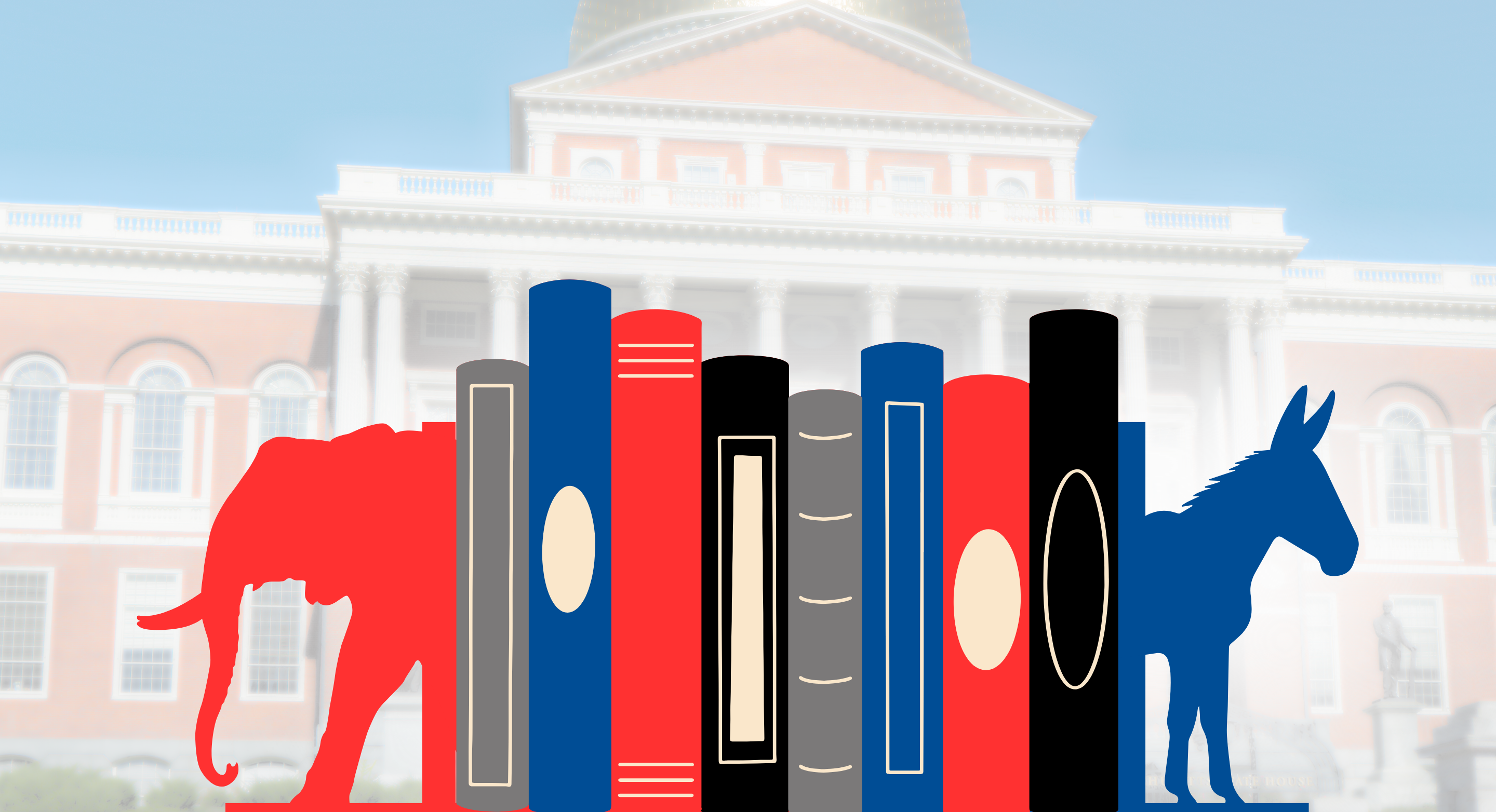
In a world often characterized by political polarization, it’s refreshing to witness a growing trend of bipartisanship surrounding early literacy policy. Literacy has become a policy area where research and evidence are winning the day, and it’s exciting to see lawmakers from both sides of the aisle finding common ground.
What is it about this policy area that’s bringing political parties together?
It starts with consensus on the problem.
According to 2022 National Assessment of Educational Progress (NAEP) results, two-thirds of American fourth graders are not proficient in reading. That’s concerning, because by the time kids are entering fourth grade, they should be making the shift away from learning to read to reading to learn. With 67% of our students not reading on grade level, the nation is on a dangerous precipice.
The data are undeniable. But agreeing on a solution to the problem is often where we see the political parties diverge. Yet in the case of early literacy, we’re now seeing agreement and true bipartisanship.
It wasn’t always the case. For a long time, education policy wonks debated which techniques were best for teaching kids to read. It was an era dubbed by many as “the reading wars.”
At the time, some experts thought we could teach kids to read by helping them guess and use context clues, even pictures, to figure out a word they may not know. It’s a method called three-cueing, and a huge body of evidence has since proven it doesn’t work.
Today, we have decades of multidisciplinary research showing more precisely how the brain learns to read. Described collectively as the “science of reading,” this research documents the effectiveness of systematic phonics instruction, phonemic awareness and other foundational skills that form the building blocks of literacy. When teachers use these methods based on the science of reading, kids are successfully learning to decode and sound out words they don’t recognize…and then build vocabulary, fluency and comprehension.
The science of reading is the foundation for comprehensive early literacy policy. And the long-term results in states that have adopted these policies are beyond compelling. Consider these examples:
In the early 2000s, when under the leadership of Gov. Jeb Bush, Florida adopted its comprehensive early literacy policies, the state’s fourth-grade NAEP scores started climbing, bringing achievement in reading from third state from the bottom to the top five. Mississippi followed the Florida model in 2013 with adoption of its Literacy Based Promotion Act and subsequently saw its fourth-grade NAEP scores move from 49th to 21st in the nation.
Further, in 2019, Mississippi was the only state in the nation with statistically significant improvement in fourth-grade reading. And despite the pandemic in 2020 and 2021, Mississippi stayed ahead of the national average in 2022’s NAEP results, even as 30 other states showed significant declines.
These significant changes in law are serving as a model for every state. Lawmakers recognize the connection between literacy and a person’s ability to achieve their full potential and live a purposeful life.
It’s not hard to agree that we all want successful, fulfilling lives for our kids. Literacy is a big part of that equation, and the proven research is now helping states do literacy policies the right way.
What have the states been doing recently to improve early literacy, and where are we seeing bipartisanship blossom?
To date, 32 states have passed legislation using a comprehensive approach to improving early literacy. These interrelated policies focus on a number of critical, fundamental principles that include training and supports for teachers grounded in the science of reading; high-quality materials and instruction aligned to evidence-based practices; screening of students beginning in kindergarten to identify struggling readers; and individualized reading plans using evidence-based interventions for those struggling readers.
To ensure students have success with reading, states also have started taking a hard stance against disproven instructional methods.
In 2021, Arkansas was the first state to ban three-cueing from reading instruction. In fact, the success of that legislation was thanks to the leadership of Arkansas Rep. Keith Brooks, who serves as vice chair of the Education Committee. He raised awareness around the ineffective three-cueing instructional method after one of his children struggled to read and learn under this approach before discovering the science of reading.
Louisiana followed with a three-cueing ban in 2022, and in 2023, leaders in eight states took action during the legislative session to do the same. Florida, Indiana, North Carolina, Ohio, South Carolina, Texas, West Virginia and Wisconsin all banned the practice and required its elimination from school curricula and, for some, in teacher prep programs.
This year, several more states – including Virginia and Pennsylvania – are moving proposals this legislative session to address the flawed method. Of note, both of these states have bipartisan sponsors offering the legislation, and in Virginia, the bill (HB 647) received unanimous votes in both the House Education Committee and on the full floor.
In 2024 so far, nearly a dozen governors are setting ambitious early literacy goals. Consider these examples:
Leaders of longtime red states are setting their sights on proven early literacy policies.
- Idaho Gov. Brad Little called for improved student literacy rates. State Superintendent Debbie Critchfield has made it a priority for the state’s Department of Education, and we expect to see legislation this year.
- Indiana Gov. Eric Holcomb expressed the need to improve third-grade reading proficiency. This takes strong leadership because giving third graders who aren’t reading at grade level an extra year of learning is a key part of a comprehensive literacy policy that’s highly effective but not always popular.
- Iowa Gov. Kim Reynolds is focused on passing a comprehensive early literacy policy, advocating for the science of reading, banning three-cueing and providing teachers with professional development.
- South Carolina Gov. Henry McMaster emphasized the importance of early literacy and professional development in the science of reading.
Governors in longtime blue states are also motivated to go big with early literacy, signaling strong bipartisan support for these policies.
- Massachusetts Gov. Maura Healey set a goal for her state to be first in the nation for early literacy. She emphasized evidence-based literacy materials in schools and a comprehensive approach to teacher professional development in early literacy best practices, backed by a $30 million investment in her budget proposal this year.
- New Jersey Gov. Phil Murphy prioritized literacy and mentioned forthcoming proposals to ensure students are taught the fundamentals aligned to the science of reading.
- New Mexico Gov. Lujan Grisham set a goal to “double down” and “supercharge” early literacy efforts, calling for significant funding to establish a Statewide Literacy Institute and a free summer literacy program aimed at ensuring 10,000 students achieve grade-level reading proficiency.
- New York Gov. Kathy Hochul highlighted her administration’s intention to propose $10 million to train teachers in evidence-based literacy practices, and she urged districts to adopt high-quality instructional materials aligned to the science of reading.
With growing bipartisan support and clear evidence for the science of reading, what comes next?
Florida and Mississippi paved the way for today’s successes, and we’re now seeing an increasing number of states pushing a comprehensive policy approach. These states are showing what’s possible when teachers are trained and supported, all students are exposed to teaching and materials grounded in the science, and struggling students are identified and provided with evidence-based interventions.
We must stay vigilant, however. Some legislators in Arizona are currently putting politics before policy and attempting to roll back requirements for teachers to earn science of reading credentials and for schools to report their literacy plans. It takes courage, leadership and an unrelenting commitment to students to ensure that good policy remains good policy.
We are excited and encouraged to witness so many good ideas and all the solid research overcoming political squabbling that can hamper K-12 policymaking.
State leaders from both political parties are sending a clear message that we can no longer ignore the data when it comes to teaching our youngest readers. We have to take action, and there’s no time to wait.
Continued collaboration is essential to meet the evolving needs of students and educators and to ensure that state policies remain effective and responsive to the latest research. As new bills become law, we also must remain vigilant throughout the implementation process. States must make policy shifts with fidelity, and they must support educators in doing so at the district, school and classroom levels. It doesn’t do any good to pass something at a statehouse if the policy never makes it to the schoolhouse!
The growing bipartisan support for comprehensive, science-based literacy policy is a beacon of hope in an often politically divided landscape. Let’s keep the momentum going until every student has access to the resources and learning they deserve to become strong, lifelong readers.