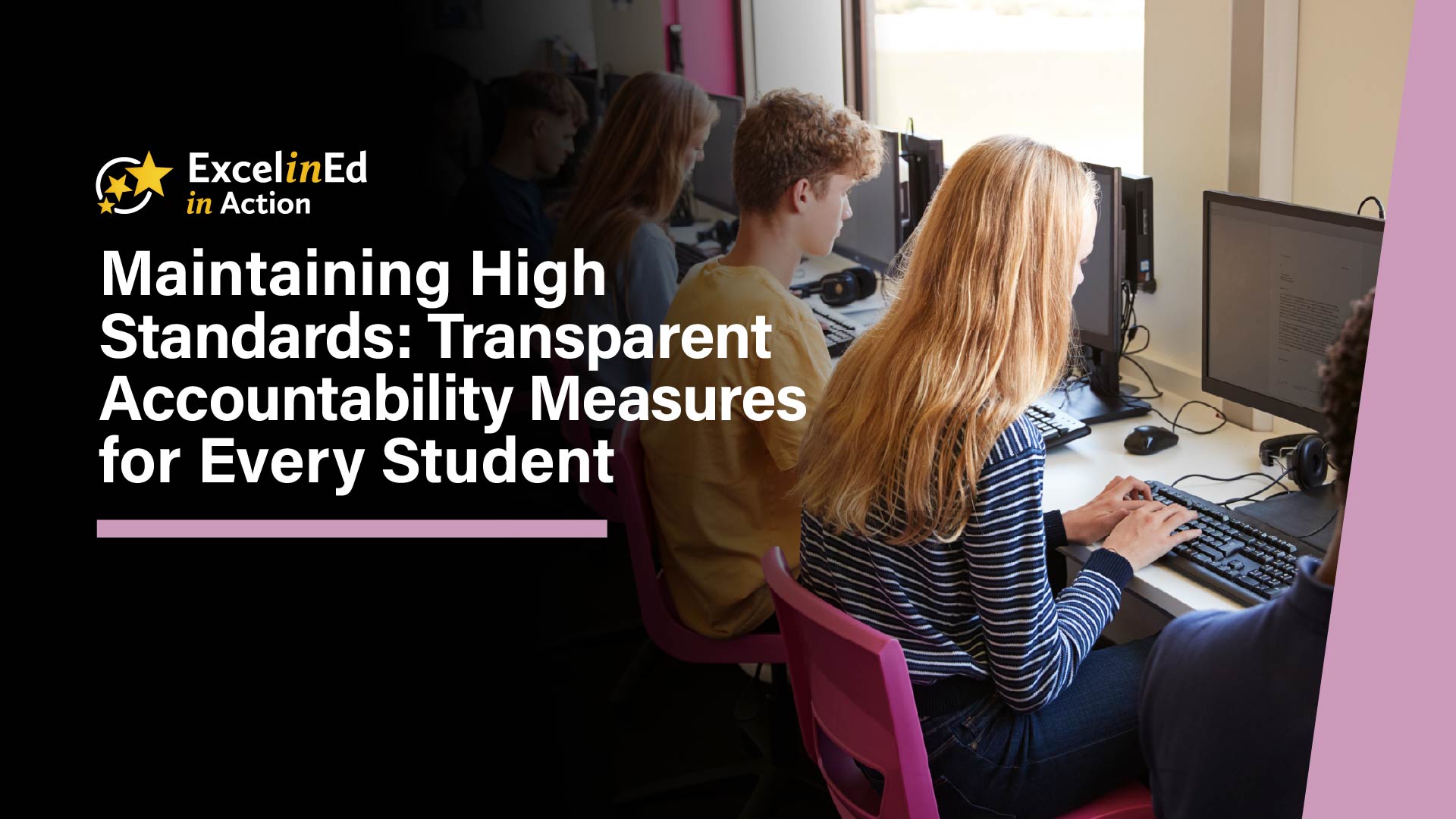
In 2025, state leaders once again demonstrated their commitment to strong assessments and transparent school accountability systems. Across the country, many lawmakers rejected efforts to weaken statewide tests, dilute A-F grading and lower proficiency expectations. Instead, state leaders acted to ensure everyone has access to clear, comparable and honest information about student learning.
This blog summarizes state policy actions from 2025 that protected and strengthened statewide accountability systems designed to support student success.
Why Accountability and Assessments Matter for Schools and Students
Transparency in education starts with consistent statewide assessments and honest reporting of results. While accountability itself does not improve student outcomes, the information it generates drives improvement. State boards, educators, policymakers and families use these data to:
- Identify learning gaps early.
- Target resources and interventions effectively.
- Measure whether instructional practices are working.
- Promote continuous improvement across classrooms, schools and districts.
- Assess how well schools serve students.
When families and communities have access to reliable, easy-to-understand data, they’re empowered to make informed choices and advocate for strong educational outcomes. Accountability is about ensuring every student is supported and prepared for the future.
Quality assessments are essential elements of impactful school accountability, academic rigor and effective classroom instruction that prepares students for postsecondary success. Simple and effective policy changes can ensure assessments serve their real purpose: measuring student achievement and providing actionable results that improve instruction and student learning.
State Actions Protecting School Accountability in 2025
Arizona
In Arizona, HB 2078 included a proposal to allow school districts to replace the statewide assessment with a menu of testing options that ultimately was defeated. Arizona’s statewide assessment and accountability system must ensure families, educators and leaders have comparable data about student learning and performance.
Florida
In Florida, SB 166 would have eliminated the requirement to pass Algebra I and 10th grade English language arts assessments to graduate. Ultimately, the bill was stopped, and critical benchmarks for understanding student readiness for postsecondary success were protected.
Iowa
Iowa policymakers improved flexibility in the state’s assessment system with HF 190, allowing students enrolled in virtual learning environments to complete statewide summative assessments online, with appropriate verification measures in place.
Oklahoma
In 2024, the Oklahoma Department of Education took troubling action by lowering passing (cut) scores on its state assessments, creating a misleading picture of student proficiency and widening the state’s “honesty gap”—the difference between state-reported proficiency and results on the National Assessment of Educational Progress (NAEP).
In 2025, state leaders in Oklahoma successfully reversed the lowering of cut scores on student assessments, reverting to stronger 2017-18 scores and launching a new standards validation study.
Texas
HB 4 and SB 1962 were introduced in Texas to replace summative assessments with a less rigorous norm-referenced test and to dilute A-F school grading with additional non-academic metrics. Lawmakers instead preserved the state’s assessment and accountability systems ensuring that students, families and educators have access to consistent, transparent student outcomes data.
National Impact and What to Expect in 2026
In 2025, many states stood firm against efforts that would weaken school accountability systems.
Late in the year, state boards in Virginia and Mississippi took additional steps to strengthen accountability.
As we look ahead to 2026, we can expect additional states to follow suit by protecting or strengthening school accountability measures and rejecting attempts to water down rigorous standards, assessments and transparency for families.
Dive Deeper into School Accountability Policy with These Resources
Explore accountability policy solutions from our sister organization, ExcelinEd.
Listen to season 2, episode 5 of ExcelinEd’s Policy Changes Lives podcast where host Christy Hovanetz sits down with longtime education leader and ExcelinEd board member Chris Cerf to examine “the honesty gap” and school accountability policy that works.
Listen to A Candid Conversation About Accountability: Why Some States Nail it, Others Miss the Mark, a thought-provoking fireside chat hosted by Aimee Guidera with Cerf and Hovanetz on the evolution and current state of assessment and accountability systems. They make the case for rigorous measurement, unflinching transparency and upholding high expectations to drive success for all students.
Read more from this blog series where we summarize which states took action on key policy trends reshaping K-12 education across the country.
References
- Azleg.gov – ‘HB 2078’ Link: HB 2078
- S3.amazonaws.com – ‘House Bill 25-1278′ Link: House Bill 25-1278
- Flsenate.gov – ‘Senate Bill 166 (2025)’ Link: CS/SB 166: Administrative Efficiency in Public Schools
- Legis.iowa.gov – ‘Iowa Legislature – BillBook’ Link: HF109
- Excelined.org – ‘Oklahoma Maintains Transparency and High Standards with Student Performance Cut Scores’ Link: Oklahoma Maintains Transparency and High Standards with Student Performance Cut Scores
- Wapp.capitol.tn.gov – ‘Tennessee General Assembly SB 415’ Link: SB 415
- capitol.tn.gov – ‘Senate Bill 636’ Link: SB0636
- Legiscan.com – ‘Bill Text: TN SB0157 2025-2026′ Link: Tennessee Senate Bill 157
- Capitol.texas.gov – ‘Texas Legislature Online – 89(R) History for HB 4’ Link: HB 4
- Capitol.texas.gov – ‘Texas Legislature Online – 89(R) History SB 1962’ Link: SB 1962
- Doe.virginia.gov – ‘Virginia Board of Education Agenda Item C’ Link: Final Review of Proposed 2025-2026 Proficiency Cut Scores
- Excelined.org – ‘Virginia Adopts Policy to Advance Honest Student Achievement Reporting’ Link: Virginia Board of Education Identified Misalignment Between NAEP and State Proficiency Cut Scores and Adopts Policy to Advance Honest Student Achievement Reporting
- Mdek12.org – ‘Office of Chief Accountability Officer’ Link: Approval of A-F performance level cuts for schools and districts as established in the Mississippi Statewide Accountability System
- Excelined.org – ‘Mississippi Recommits to High Expectations for All Schools’ Link: Mississippi Recommits to High Expectations for All Schools
- Excelined.org – ‘School Accountability’ Link: School Accountability
- youtube.com – ‘A Candid Conversation About Accountability: Why Some States Nail it, Others Miss the Mark’ Link: A Candid Conversation About Accountability: Why Some States Nail it, Others Miss the Mark
- Shows.acast.com – ‘Policy Changes Lives, an ExcelinEd Podcast’ Link: Examining “the honesty gap” and school accountability policy that works | Chris Cerf