Patricia Levesque is the Executive Director of ExcelinEd in Action.

By Patricia Levesque
Imagine yourself in a classroom: Sunlight streams through the windows, students are actively engaged, and their eyes are focused—not on glowing screens hidden under desks, but on the teacher at the front of the room facilitating the day’s lesson or on the team project they are creating with their classmates.
This may seem like a scene from a bygone era, but it’s a reality states can help achieve by implementing responsible limitations on social media and smartphones in the classroom and beyond. State-level policies can be designed to empower teachers with better learning environments in the classroom and, when they are more broadly crafted, protect children at home from the harmful effects of social media.
Arkansas, Louisiana, North Carolina, Texas, Utah and Virginia enacted laws last year increasing requirements on social media companies to verify the age of account holders under 18 and/or to obtain parental or guardian consent for those users to have accounts.
Florida passed legislation in 2023 to prohibit the use of cell phones during instructional time unless students had a teacher’s specific permission for an educational purpose. Florida tied this to comprehensive reforms related to cell phone use by children and teens: blocking social media sites from school networks; teaching students about the social, emotional and physical harms of social media; and beefing up protections for student data privacy.
So far this year, almost a quarter of states are considering legislation to curtail cell phone use during the school day and/or limit youth access to social media platforms. This policy push is part of a growing national movement to address the harm we know these platforms are causing in our kids’ lives.
The pervasiveness of technology is undeniable, and there’s no doubt that technology—both inside and outside the classroom—can be incredibly helpful for learning, providing educators with innovative ways to connect with students.
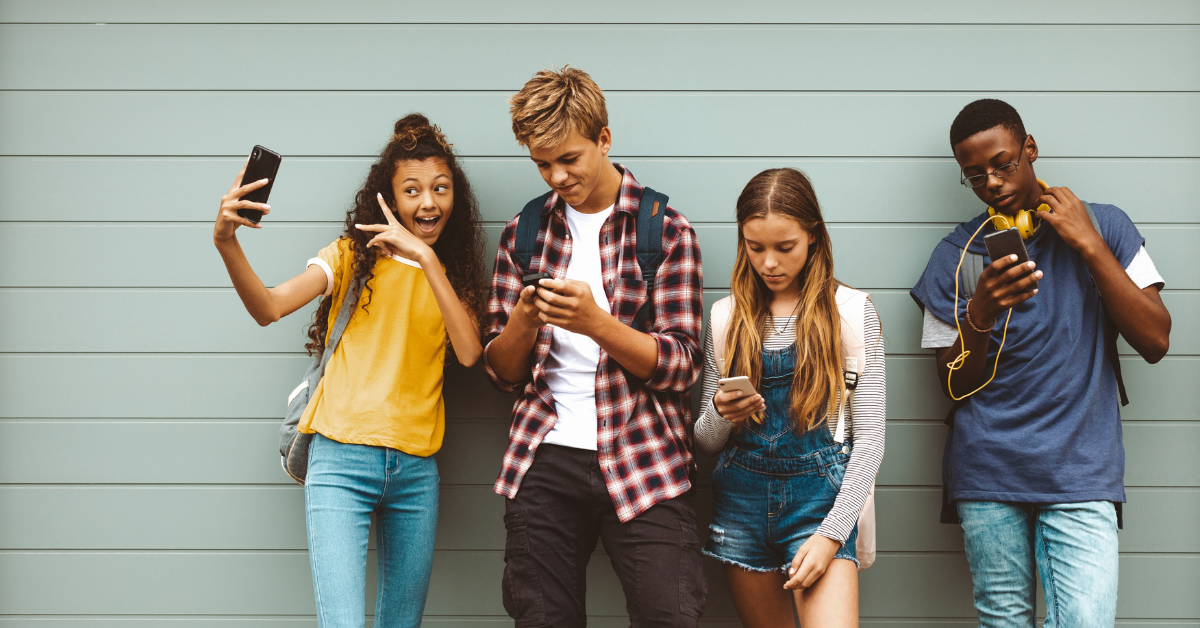
Yet while technology can offer connection and educational resources, its constant presence in students’ lives and in their classrooms creates an often-detrimental mix of distraction, anxiety and cyberbullying.
The American Academy of Pediatrics warns of the negative impacts on children’s sleep, learning and mental health. Educators, on the frontline of this digital deluge, are witnessing these effects firsthand.
In a recent survey, nearly three in four teachers reported feeling cell phone use is harming students’ social-emotional development, and 71% said they are concerned about social media having a negative effect on students’ mental health.
A 2023 report found that social media use among young people is “nearly universal,” with up to 95% of teenagers and 40% of children ages 8–12 using the platforms. The report also found that kids on social media are often exposed to extreme, inappropriate and harmful content, and those who spend more than three hours a day on social media face twice the risk of poor mental health, including depression and anxiety. A recent Pew Research survey of teenagers reported that they spend an average of 3.5 hours a day on social media, an alarmingly high proportion of their waking hours.
According to researcher and author Dr. Jonathan Haidt, social media causes five types of foundational harm among young people: opportunity cost of time spent on platforms each day; loss of time spent socializing with friends; sleep deprivation; attention fragmentation; and behavioral addiction.
These digital platforms have rewired our brains to constantly check for notifications and updates that are customized to keep us coming back for more. Instead of just serving up content from specific accounts a user follows, addictive algorithms invite users to scroll endlessly, adding more and more related content without ever reaching the end of a feed.
Lawmakers in New York recently took action against the algorithms, authoring legislation either to ban algorithms outright or give users under 18 the ability to disable them. New York City also has filed a lawsuit alleging “addictive and dangerous” social media platforms are fueling a youth mental health crisis that is disrupting learning and draining resources.
New data released late last year from the International Organization for Economic Co-operation and Development (OECD) paints an even clearer—and disturbing—picture of the correlation between screen time and academic performance.
The OECD data show the best way to eliminate distractions in the classroom is a full ban on cell phones on school premises. The data also suggest that the more leisure time students spent on devices and social media, particularly during the school day, the lower their academic performance in math.


Education Week recently reported that more than 200 school districts across the United States have filed lawsuits against social media companies over the youth mental health crisis. The report summarizes as follows:
In a nutshell, the lawsuits allege that social media companies have designed highly addictive products that are harmful to mental health and that they have marketed them to youth who are in a developmental stage that makes them uniquely susceptible to manipulation. Those practices, critics of social media companies argue, come at a time when school districts have been forced to devote substantial resources to addressing students’ deteriorating mental health. Many of the lawsuits are asking for money and for social media companies to change their practices—such as the design of their algorithms.
Education Week, “School District Lawsuits Against Social Media Companies Are Piling Up,” Jan. 2024
State policymakers in more than a dozen states have cell phone and/or social media restrictions on their legislative agendas. Consider these actions now in progress:
Florida has introduced legislation that would ban individuals under 16 years old from creating their own accounts on addictive social media platforms, as defined in the legislation. This is a top priority for House Speaker Paul Renner.
Georgia lawmakers are considering a bill that would require each local board of education to adopt a social media policy, publish it online and send it to families. The policy would prohibit and prevent students from accessing social media though a computer or internet provided by their school, unless expressly authorized for educational purposes.
New York has introduced the Stop Addictive Feeds Exploitation (SAFE) For Kids Act, which would prohibit social media platforms from using addictive feeds on minors’ accounts; the proposal was championed by Gov. Kathy Hochul in her State of the State Address.
A proposal in Pennsylvania would provide protections to minors on social media, giving parents oversight on their children’s use of social media. The bill would make it illegal for a social media company to knowingly, recklessly or intentionally allow or cause a minor to access certain content.
South Carolina lawmakers have proposed limiting who can be a social media account holder without parental consent and requiring companies to verify ages beginning in March 2025. The legislation also would limit advertising, direct messaging and the gathering of personal information. It would allow a parent to view a child’s account and to set limitations on when a child may or may not use the platform. This bill also requires the Department of Education to develop programs on social media literacy including the impacts of social media for grades 6-12.
Tennessee legislators have introduced several bills that would require reasonable age verification methods for individuals or a commercial entity that publishes or distributes content on a website that contains a substantial portion of material harmful to minors. Tennessee also filed a bill that would prohibit social media companies from using addictive features.
A bill in Virginia would require social media platforms to give parents or guardians the option to consent to the collection and use of a minor’s personal data without consenting to the disclosure of the minor’s personal data to third parties.
West Virginia is moving legislation that would restrict the age to access social media.
Indiana lawmakers have filed legislation that would ban the use of cell phones in schools unless they are needed for instructional use or in case of emergency.
Iowa is considering legislation to require school district boards to establish policies prohibiting student cell phone use during the school day, unless authorized by a teacher or required by law for specific educational purposes.
In Kansas, policymakers have authored legislation to require school districts to adopt a policy banning the use of privately owned electronic communication devices, unless required by the student’s IEP, authorized by the teacher for instructional purposes or pre-approved for special circumstances.
Kentucky lawmakers have proposed requiring local school boards to adopt a policy that would, at a minimum, prohibit student use of personal telecommunications devices during instructional time with some exceptions, such as emergency situations or the direction of a teacher.
Oklahoma is considering a bill that would establish a three-year pilot program incentivizing phone-free spaces in middle and high schools.
In Virginia, lawmakers are considering a policy that would permit each local school board to develop and implement a policy to prohibit the possession or use of cell phones and other handheld communication devices during regular school hours.
Mississippi is considering legislation that requires school districts to develop policies prohibiting cellphone use during instructional time, unless authorized by a teacher. The legislation also requires the Mississippi Department of Education to develop curriculum to educate middle school and high school students about the negative effects of social media.
Tennessee is considering legislation that would prohibit the use of smartphones in school unless allowed for instructional purposes.
Arizona is considering legislation that would require school districts to prescribe and enforce policies that limit student access to social media and wireless devices during the school day.
Technology is evolving so rapidly that it may be decades before we realize what effect using social media today will have on students’ futures.
The legislative initiatives described above aim to address legitimate concerns surrounding the use of technology among children and teens, the importance of reigning in seemingly omnipresent social media platforms and improving educational outcomes for students.
To be clear: From our perspective, no state has gone far enough on cell phone limits. Banning cell phones during instructional time still means kids will be hooked to their phones while switching classes, during lunch and during other breaks.
As author and researcher Arthur Brooks said in his keynote address at our National Summit last year:
There’s a lot that we can do. It is insane that there are still phones in schools. It is insane that we’re doing that. We need teachers and superintendents and politicians and leaders in communities to say, ‘This is going to stop.’ At least there should be a safe zone for a few hours a day where young people are not actually depriving themselves of the neuropeptide of oxytocin, eye contact and touch because they’re staring at social media and bingeing it instead of actually having in-person relationships.
Harvard professor and bestselling author Arthur Brooks, ExcelinEd National Summit, Nov. 2023
As these urgent conversations continue across the nation, we urge lawmakers to embrace this issue head-on with cell phone bans in schools, not just in classrooms, so our students can truly have and experience that phone-free “safe zone.”
We look forward to working with lawmakers to craft effective legislation that promotes a safe and conducive learning environment for this generation and the next.
